Design Build A Boat Dealers News Shop Find a Dealer
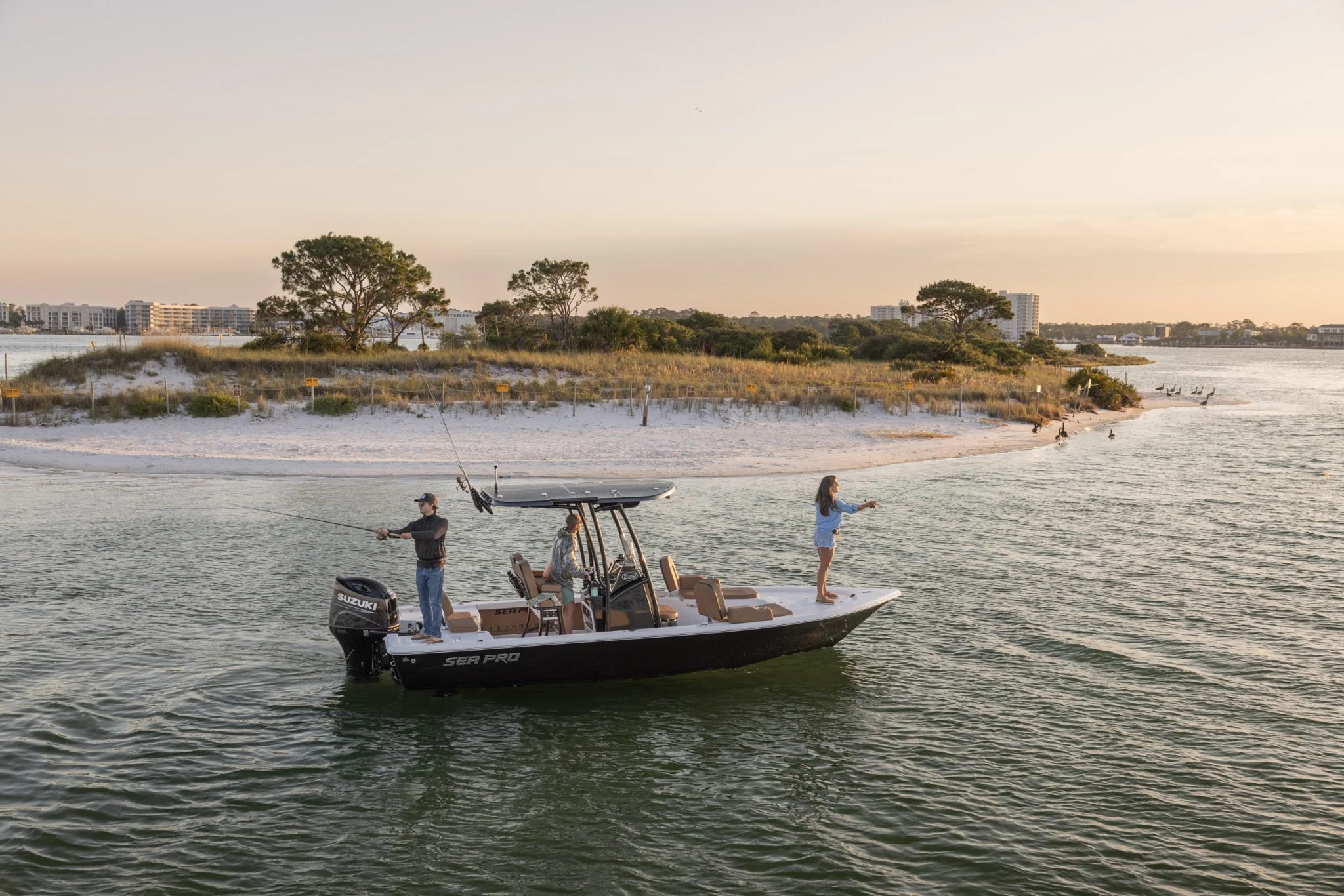
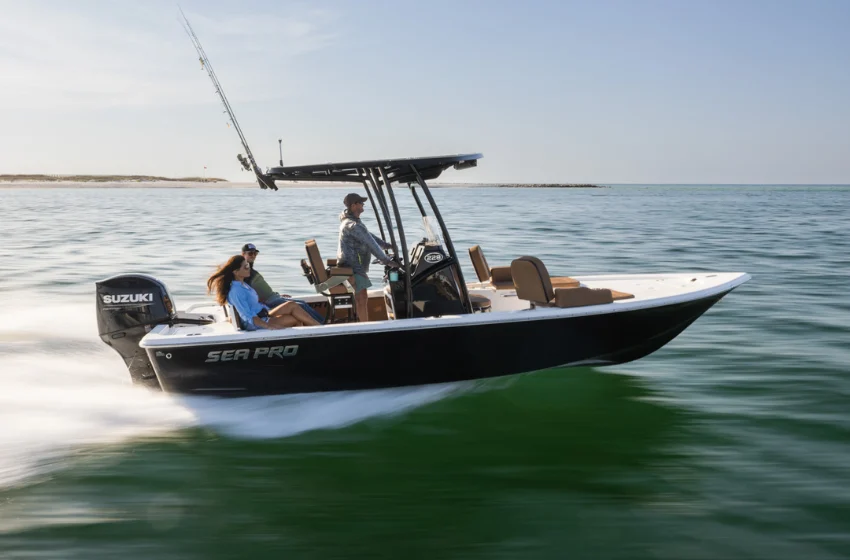
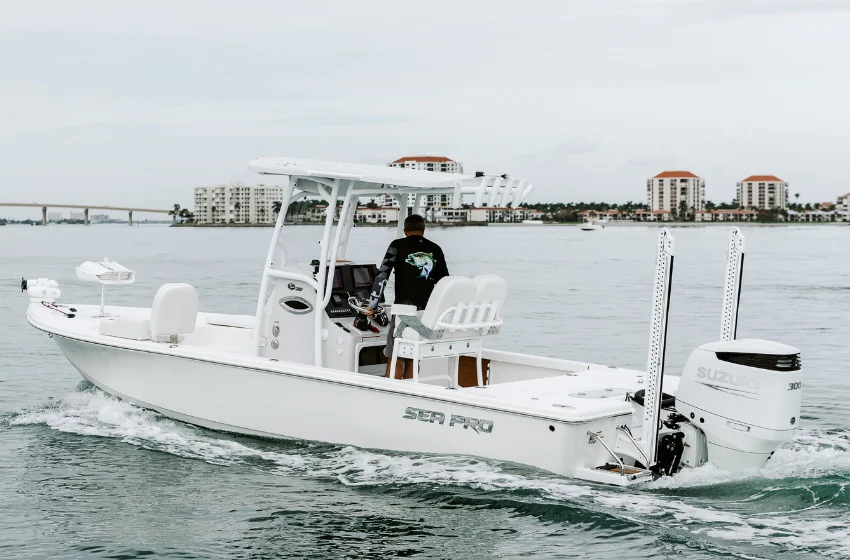
Anglers fishing from a Sea Pro bay boat beside a sandbar at sunset

Home  /  Boats  /  Bay Boats

Sea Pro Bay Boats

Bay Boats

Shallow-draft saltwater fishing boats from 17'2" to 24'8", hand-laid in Whitmire, South Carolina. Drafts from 10", a tunnel-hull option, and a 10-year hull warranty, from $36,038.

Models
5
Lengths
17–25 ft
Draft from
10"
Starting at
$36,038

The basics

What is a bay boat?

A bay boat is a shallow-draft saltwater fishing boat built for bays, sounds, marshes and flats, with enough hull to run the nearshore when the weather allows. It sits between a flats skiff and a center console: a moderate-V hull that floats in a foot of water or so, low sides for casting and landing fish, a center console, and raised casting decks at the bow and stern.

Bay boats are built to fish. Livewells, rod storage and a big open deck come standard, and most are rigged with a bow-mount trolling motor, shallow-water anchors and a jack plate that lifts the outboard so it keeps biting in skinny water. Their low, stable layout also makes them easy family boats for a sandbar day.

Sea Pro builds 5 bay boats from 17'2" to 24'8", including the 250 Tunnel, with a tunnel molded into the hull to run even shallower. Every one is hand-laid in Whitmire, South Carolina and sold through 65 authorized dealers.

Side by side

Compare Sea Pro bay boats

Draft, deadrise and beam are the numbers that decide where a bay boat can go. Here they are for every Sea Pro bay boat.

Model Length Beam Draft Deadrise Max HP Fuel People Livewells Jack plate Seakeeper Ride Starting at
Bay boats
172 Bay 17'2" 7'2" 10" 15° 115 28 gal 5 12 gal (2) 6" optional Optional $36,038
210 Bay 20'8" 8'4" 12" 15° 200 61 gal 7 16 gal (2) 8" optional Optional $59,790
230 Bay 22'8" 8'4" 12" 15° 250 61 gal 8 16 gal (2) 8" optional Optional $77,535
250 Bay 24'8" 8'9" 15" 15° 350 70 gal 10 30 gal (2) 12" optional Optional $99,896
250 Tunnel 24'8" 8'9" 15" 15° 350 70 gal 10 30 gal (2) 12" standard Optional $99,896

Draft is the published static draft at rest; the depth you can run and get on plane in depends on load, trim, motor height and setup. Prices are U.S. starting prices before options, freight and dealer prep, and change with the outboard you choose; your dealer quotes the final price. Specifications can change without notice.

Sizing

What size bay boat do you need?

Smaller bay boats float shallower and tow easier; bigger ones ride better in a chop and carry more people. Here is how the Sea Pro lineup splits.

17 ft

Skinny water, small crews

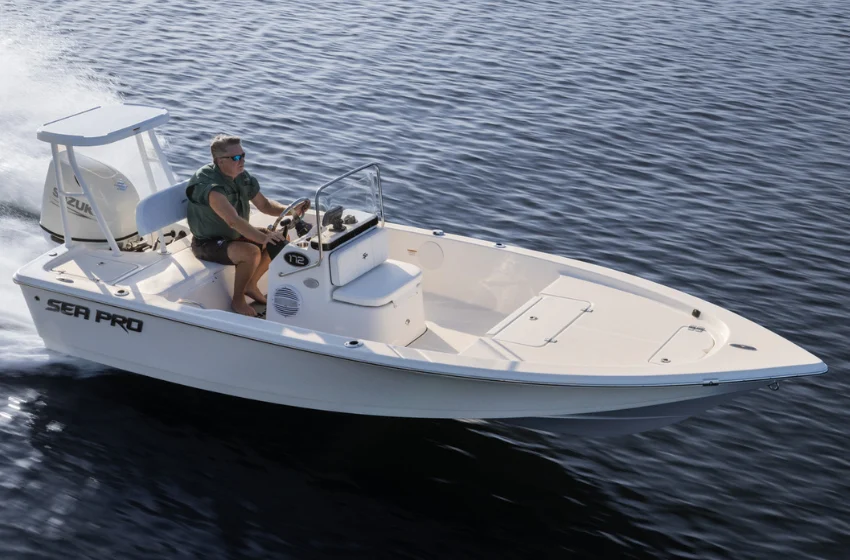
Floats in as little as 10", tows behind almost anything, and gets into creeks and flats bigger boats can’t. The 172 Bay’s optional poling platform makes it the closest thing to a skiff in the lineup.

  • Flats, creeks and backcountry
  • One to three anglers
  • Light tow vehicle, easy storage

172 Bay

21–23 ft

The sweet spot

The size most bay boat buyers land on: room for the family and a cooler, enough hull for an open-bay chop, and still about a foot of draft for the flats.

  • Inshore fishing and family days
  • Open bays and calm nearshore
  • Trolling motor and Power-Pole ready

210 Bay · 230 Bay

25 ft

Big-water bay boats

The most hull, beam and fuel of the bay boats, so they ride better when the bay kicks up and carry a bigger crew. Choose the 250 Tunnel to run shallower with the same hull.

  • Big bays and sounds
  • Nearshore on fair days
  • Bigger crews

250 Bay · 250 Tunnel

22–26 ft

Also consider: Sandbar boats

Not bay boats — center consoles with a family-first finish. They don’t float as shallow (14"–19" of draft) and aren’t rigged for poling the flats, but if your days are more sandbar than flats, they give you the tables, the seating and a center console’s ride across open water. See the Sandbar boats.

  • Sandbar and island days
  • Family crews
  • Rougher open water

225FLX · 245FLX · 265 FLXR

Run shallower

What is a tunnel hull bay boat?

A tunnel hull has a channel molded into the bottom of the hull at the transom. Water packs into the tunnel and stays high behind the boat, so a hydraulic jack plate can lift the outboard higher and the prop still bites. The result: a boat that runs, turns and gets on plane in shallower water than the same hull without a tunnel.

The Sea Pro 250 Tunnel is the 250 Bay with a tunnel hull and a 12" hydraulic jack plate as standard. Watch how it works:

How the 250 Tunnel works Photo of the boat running, with an x-ray sketch of the stern below the waterline. On a standard hull, water leaves the transom at the bottom of the hull and the outboard hangs low to reach it. On the 250 Tunnel, a tunnel molded into the hull fills with water, so the water behind the transom stays high; the hydraulic jack plate raises the outboard, the propeller stays in solid water, and there is more clearance over the bottom.

Know the difference

Bay boat vs. center console vs. flats skiff

The right hull depends on the water you fish most. Here is how the three compare.

Bay boat Center console Flats skiff
Best water Bays, flats, marshes and calm nearshore days Inshore to offshore Very shallow, calm water; sight fishing
Hull Moderate V (15° at Sea Pro): shallow draft with a softer ride than a flat bottom Deep V (16°–24.5° at Sea Pro): the best ride in a chop Flat or slight V: the least draft, the roughest ride in a chop
Draft About 10–15 inches (10"–15" at Sea Pro) Deeper, rising with size Shallowest of the three
Fishing setup Raised casting decks, livewells, trolling motor and Power-Pole Walkaround deck, rod holders, bigger fish boxes Poling platform, minimal deck clutter
Comfort Stable, low and easy to board; room for family Higher, drier sides; more seating on bigger models Spartan; few seats and little storage
Choose it if You fish shallow most of the time but want a boat the family enjoys You fish offshore or rough water often You pole the flats and fish alone or with one friend
Sea Pro models 172 Bay · 210 Bay · 230 Bay · 250 Bay · 250 Tunnel All 10 Sea Pro center consoles Sea Pro doesn’t build a technical skiff; the 172 Bay with its optional poling platform comes closest

Spend more days at the sandbar than on the flats? Look at the Sea Pro Sandbar boats — the 225FLX, 245FLX and 265 FLXR. They aren’t bay boats: they’re center consoles with a family-first finish, with a center console’s ride in open water and tables and seating for a crowd. And if you mostly run offshore, start with the center consoles.

Every Sea Pro

Built the Sea Pro way

One-piece stringer grid

Hand-laid hulls over a one-piece, fully gel-coated fiberglass stringer system, bonded with methacrylate for a strong, low-maintenance chemical bond.

Foam-filled and sealed

Hull sides and deck boxes are foam-filled and sprayed with a vinyl-ester barrier coat, and the bottom carries vinyl-ester from the waterline down against osmotic blistering — a quieter, better-insulated boat.

Shallow-water options

Hydraulic jack plates, Power-Pole shallow-water anchors and Minn Kota Terrova trolling motors are factory options on every bay model. The 172 Bay adds an optional poling platform.

Tunnel hull option

The 250 Tunnel pairs the 250 Bay with a tunnel molded into the hull and a standard 12" hydraulic jack plate, so the motor rides higher and the boat runs shallower.

10-year hull warranty

A 10-year limited hull warranty, transferable to a second owner after an inspection, plus a 5-year limited warranty on the boat with parts and labor in year one. Read the details.

Seakeeper Ride on every bay boat

Every Sea Pro bay boat can be ordered with Seakeeper Ride, which Seakeeper says cuts up to 70% of pitch and roll — the biggest ride upgrade you can make to a moderate-V hull in a chop.

Questions & answers

Bay boat FAQ

Straight answers to the questions buyers ask most before choosing a bay boat.

What is a bay boat?

A bay boat is a shallow-draft saltwater fishing boat, usually 17 to 26 feet long, with a center console, low sides and raised casting decks at the bow and stern. Its moderate-V hull — about 15° of deadrise — floats in roughly 10 to 15 inches of water, so it can fish flats, marshes and backcountry creeks and still cross an open bay.

Sea Pro builds 5 bay boats from 17'2" to 24'8", including a tunnel-hull model.

What are bay boats used for?

Inshore fishing above all: redfish, trout, flounder, snook and stripers in bays, sounds, estuaries and marshes, and sight fishing on the flats from the casting decks. On calm days they run nearshore for cobia, kings and reef fish. With low sides that make boarding and swimming easy, they are also popular for sandbar days with the family — and, inland, on big lakes and rivers.

How shallow can a bay boat go?

Two numbers matter. Static draft is how deep the hull sits at rest; most bay boats draw 10 to 15 inches. Running depth — the water you can cross on plane — is often shallower, but it depends on load, trim, jack-plate height and setup, so builders rarely publish it.

Sea Pro bay boats draw from 10" on the 172 Bay to 15" on the 250 Bay. A hydraulic jack plate lets you lift the outboard in skinny water, and the 250 Tunnel adds a tunnel hull to run shallower still. Learn your own boat’s draft loaded, and use a Power-Pole or trolling motor to work the shallowest water.

Can a bay boat go offshore?

Yes, on the right day. Bay boats routinely run a few miles off the beach for cobia, kings and reef fish when the seas are calm. Their low freeboard and moderate deadrise make them less comfortable — and less forgiving — in steep, breaking seas, especially through inlets when the tide runs against the wind.

For nearshore trips choose a bigger bay boat like the 250 Bay, watch the forecast, carry a VHF and an EPIRB or PLB, and keep a margin of fuel. If you plan to run offshore often, look at a Sea Pro center console, including the family-first Sandbar models.

How do bay boats handle rough water?

A bay boat trades some rough-water ride for shallow draft. With about 15° of deadrise it slaps harder in a short, steep chop than a deep-V, and its low sides take more spray. Longer, wider and heavier bay boats ride noticeably better, and trimming the bow down and easing off the throttle makes a big difference.

Every Sea Pro bay boat can be ordered with Seakeeper Ride, which actively levels the boat — Seakeeper says it eliminates up to 70% of pitch and roll — and trim tabs or Zipwake interceptors are options on most models.

Bay boat or center console: which should I buy?

Decide by the water you fish most:

  • Mostly shallow bays, flats and marsh: a bay boat — shallower draft, lower sides for casting and landing fish, and usually a lower price.
  • Mostly nearshore and offshore, or rough open water: a deep-V center console — more deadrise, more freeboard, more fuel and a drier ride.
  • A real mix: a hybrid bay boat, or a mid-size center console.

Sea Pro builds bay boats and center consoles, including the family-first Sandbar models. See the side-by-side comparison, or compare the center consoles.

What is the difference between a bay boat, a flats boat and a skiff?

A flats boat or technical skiff is smaller and lighter, with an almost flat bottom, very low sides and a poling platform; it floats in a few inches and is built for poling the flats in calm water. A bay boat is bigger, with a modified-V hull, a center console, livewells and casting decks — it gives up a few inches of draft for a far better ride across open water and room for more people.

Sea Pro does not build a technical skiff; the 172 Bay, with its 10" draft and optional poling platform, is the closest in the lineup.

What is a hybrid bay boat?

A hybrid bay boat sits between a bay boat and an offshore center console: more length, beam, freeboard and deadrise than a traditional bay boat, so it handles rougher water and nearshore runs, while keeping bay-boat features like casting decks and a reasonably shallow draft. Magazine reviewers generally describe hybrids as 23 feet or longer, with 15° or more of deadrise and a draft of more than a foot.

Sea Pro doesn’t build a hybrid bay boat. If what draws you to hybrids is fishing and family days in one boat, look at the Sea Pro Sandbar boats — center consoles with a family-first finish. If it is a better ride for nearshore fishing, look at a mid-size center console like the 222 CC or 242 CC.

Is a sandbar boat a bay boat?

No. A Sea Pro Sandbar boat is a center console with a family-first finish. It shares its length, beam and deadrise with one of our center consoles, so it runs like a center console in open water, and its deck is built for the day: bow and stern tables, more lounge seating and cooler space.

It does a similar day to a bay boat — beach the boat, set up the table, fish when the bite turns on — which is why people shop the two side by side. But it doesn’t float as shallow (14"–19" of draft, against 10"–15" for our bay boats) and it isn’t rigged for poling the flats. Choose a bay boat if you fish skinny water; choose a Sandbar boat if your days are about family and the sandbar, with a center console’s ride to get there. See the Sandbar boats.

What is a tunnel hull bay boat, and do I need one?

A tunnel hull has a channel molded into the bottom at the transom. Water packs into it, which lets the outboard run higher on a jack plate while the prop still bites — so the boat runs and gets on plane in shallower water. You need one if your fishing takes you through the skinniest water often; if you mostly fish open bays, a standard hull is simpler and handles a chop just as well.

The 250 Tunnel is the 250 Bay with a tunnel hull and a 12" hydraulic jack plate as standard. See how it works.

What does a jack plate do, and do I need a hydraulic one?

A jack plate mounts the outboard behind the transom (the setback) and lets you raise or lower it. Raising the motor lets you run shallower water, and the setback puts the prop in cleaner water for a better holeshot and efficiency. A hydraulic plate adjusts from the helm while you run — up for skinny water, down for rough water — which is why most bay boat owners consider it worth the cost.

Sea Pro’s hydraulic jack plates: 6" optional on the 172 Bay; 8" optional on the 210 Bay and 230 Bay; 12" optional on the 250 Bay; 12" standard on the 250 Tunnel.

What size bay boat do I need?

  • 17–18 ft: creeks, flats and protected water with one to three anglers; easy to tow and store.
  • 20–23 ft: the most popular size — family days, open bays and calm nearshore runs, with about a foot of draft.
  • 24–25 ft: big bays and sounds, rougher water and bigger crews.

If you want more seating and a better ride in open water, look at a Sea Pro Sandbar boat or center console. See how the Sea Pro lineup fits each size.

How much does a bay boat cost?

New bay boats range from the high $30,000s for a 17- or 18-footer to well over $100,000 for a fully rigged 24- to 26-footer, depending on the brand, engine and options.

Sea Pro bay boats run from $36,038 for the 172 Bay to $99,896 for the 250 Bay. Starting prices include standard power; the outboard you choose, options such as a jack plate or Power-Pole, freight and dealer prep move the final number. Build and price yours.

How much horsepower does a bay boat need?

Enough to get the boat on plane quickly with a full load and hold an efficient cruise — most bay boat owners say not to buy the smallest engine offered. Mid-size bay boats usually run 150 to 250 hp, and 24- to 25-footers 250 to 350 hp.

Sea Pro bay boats are rated from 115 hp on the 172 Bay to 350 hp on the 250 Bay, with Suzuki, Yamaha or Mercury outboards. Each model page lists the available engines and links performance data where it is available.

What trolling motor and shallow-water anchor does a bay boat need?

Most bay boat anglers run a bow-mount trolling motor with GPS anchoring for working shorelines and holding on a spot, and one or two shallow-water anchors such as Power-Poles to stop silently in the shallows. Bigger boats need more thrust (often a 36-volt motor) and a longer shaft; two Power-Poles hold the boat straight in wind and current.

Minn Kota Terrova trolling motors and Power-Pole shallow-water anchors — 8 ft or 10 ft depending on the model — are factory options on every Sea Pro bay boat, along with the charging systems to run them.

Are bay boats good family boats?

Yes. Their low sides make it easy to climb aboard from a beach or swim ladder, the deck is wide and stable, and the shallow draft gets you to the sandbar. Sea Pro bay boats offer forward seating, portable or pump-out heads, ski tow bars and a stern sandbar table attachment.

If family days matter as much as fishing, also look at the Sea Pro Sandbar boats: center consoles with a family-first finish. Boating Industry named the 225FLX a 2025 Top Product and the 265FLX a 2026 Top Product.

Can you use a bay boat on a lake or in freshwater?

Absolutely. Bay boats are popular on big reservoirs, rivers and the Great Lakes, where their center console, casting decks and trolling-motor setup suit bass, walleye and striper fishing, and their hull handles wind-blown chop better than a bass boat. Freshwater is also easier on the boat and engine. Sea Pro has dealers in inland states including Oklahoma, Ohio and Michigan — find one near you.

What is the difference between a bay boat and a bass boat?

A bass boat is a freshwater boat: very low, fast and carpeted, with the console off to the side and the angler sitting near the water. A bay boat is built for saltwater, with a center console, more freeboard, a self-bailing deck, saltwater-grade hardware and more storage. A bay boat fishes freshwater well; a bass boat is not suited to saltwater.

How much does a bay boat weigh, and what does it take to tow it?

Sea Pro bay boats weigh from 1,480 lbs (172 Bay) to 3,432 lbs (250 Bay) dry, without the engine. Add the outboard, about six pounds per gallon of fuel, gear and the trailer to find your towing weight, and stay comfortably under your vehicle’s rating.

The 172 Bay, 210 Bay and 230 Bay are within the standard 8'6" legal trailer width; the 250 Bay (8'9") and 250 Tunnel (8'9") can need an oversize permit in some states.

How do I compare bay boat brands?

  • Hull and specs: draft, deadrise, beam and freeboard for the water you fish — Sea Pro publishes draft, deadrise and beam for every model in the table above.
  • Construction: how the stringers are built and bonded, foam flotation and a blister barrier below the waterline.
  • Rigging options: jack plates, Power-Poles, trolling motors and livewell sizes.
  • Warranty: length, coverage and whether it transfers. Sea Pro’s is a 10-year limited hull warranty plus 5-year limited coverage.
  • Price and dealer support: published prices, and a dealer near you for service.

What happened to the Sea Pro 208, 228 and 248 Bay?

For model year 2024 Sea Pro renamed its models so each name matches the boat’s actual length. The boats did not change size: the 208 Bay became the 210 Bay, the 228 Bay the 230 Bay, and the 248 Bay the 250 Bay. Older names still appear in reviews, magazine round-ups and used listings.

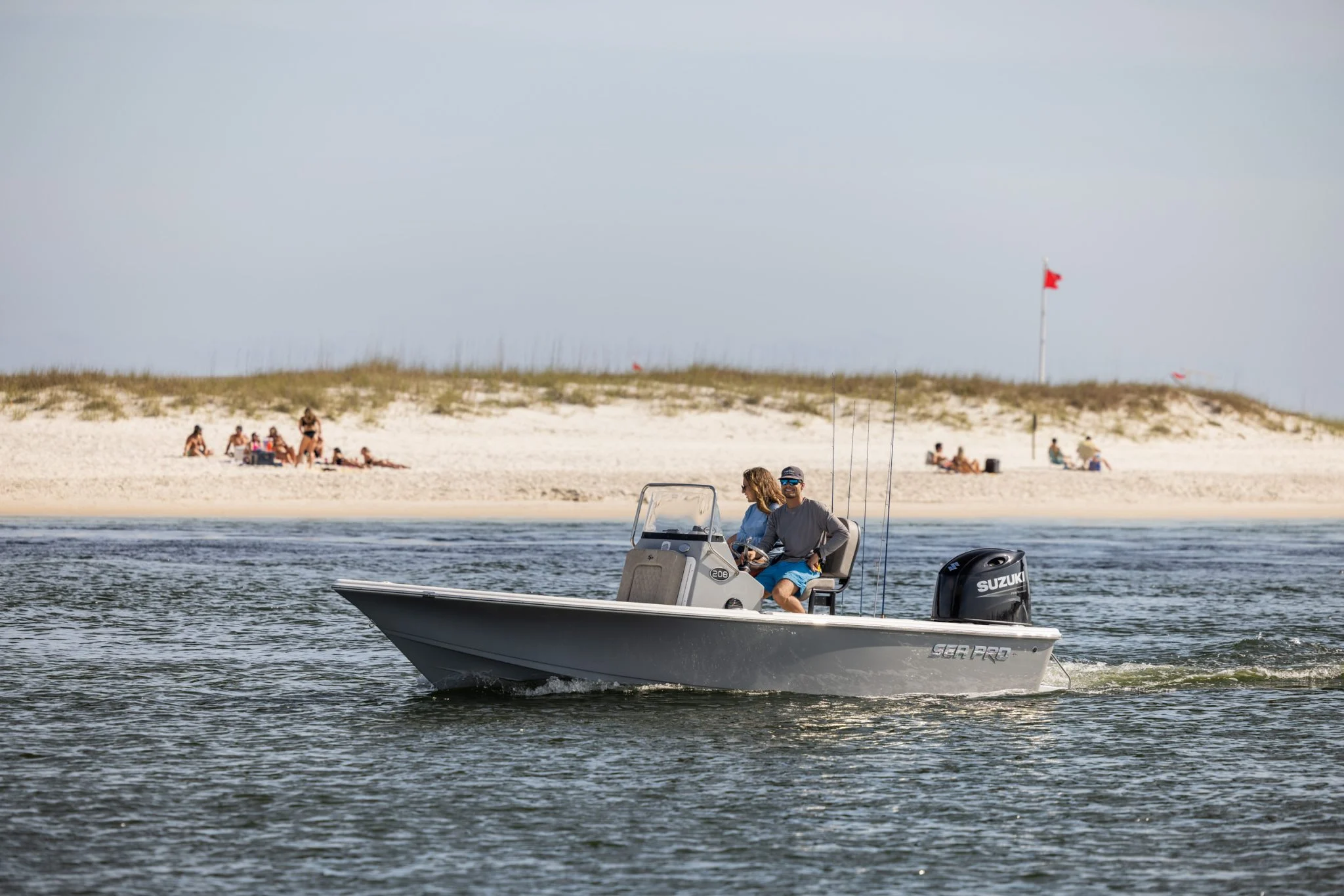
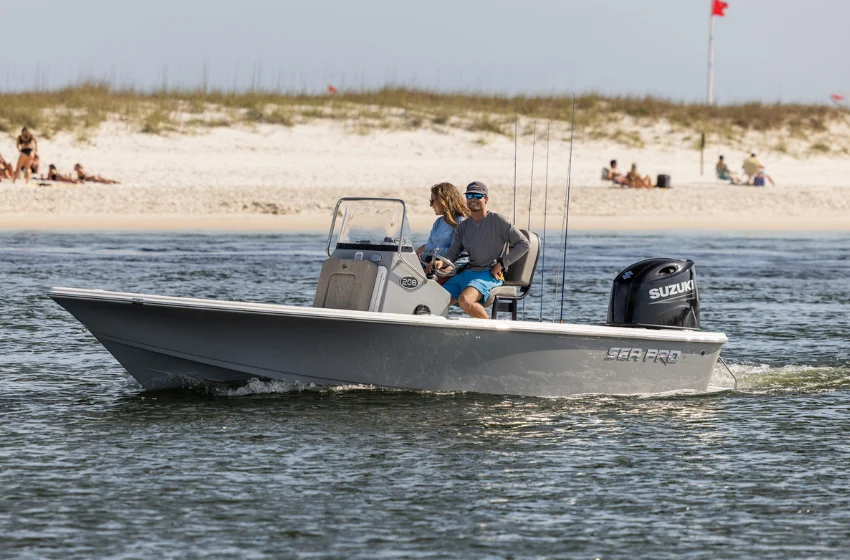
Sea Pro 210 Bay beached at a sandbar

Next step

Get aboard a Sea Pro

Sea Pro boats are sold through 65 authorized dealers. Find one near you for a walkthrough or a sea trial, build your boat online, or get the full catalog.

Find Your Dealer → Build a Boat → Get the Catalog →